Article
Sora Is Shutting Down: What It Means for AI Video Workflows
7 min read
In short
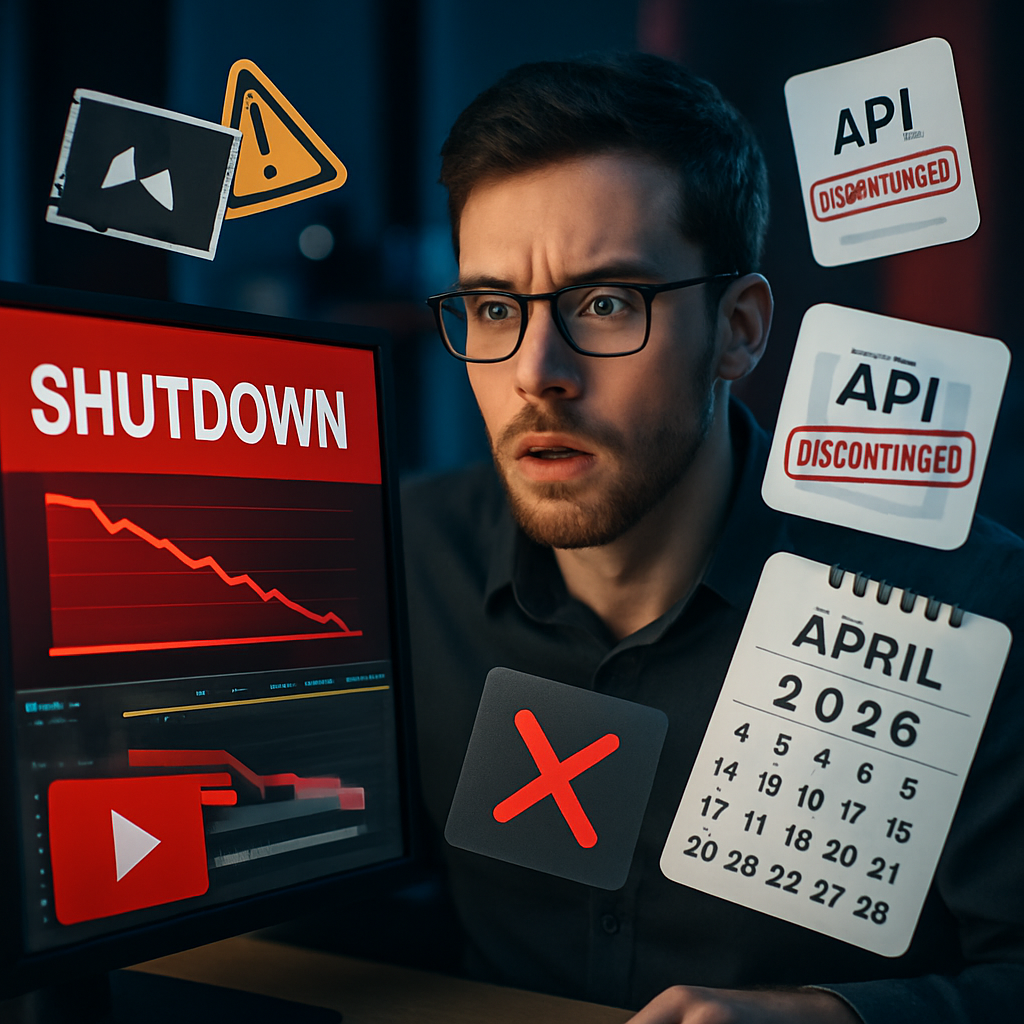
OpenAI is discontinuing its Sora text-to-video product in two stages: the consumer web and app experience was shut down on April 26, 2026, and the Sora API will close on September 24, 2026, after which all associated user data will be permanently deleted. The closure follows internal reports that Sora was a significant drain on GPU resources, a strategic pivot toward a next-generation model codenamed "Spud" and enterprise tools, and the dissolution of a high-profile partnership with Walt Disney Co. that never resulted in a paid licensing agreement. Teams with Sora API integrations must migrate before the September cutoff; stored content can be exported via sora.chatgpt.com/sunset.
Quick answer: OpenAI is discontinuing Sora in two stages — the web and app experience was shut down on April 26, 2026, and the Sora API will close on September 24, 2026. Any team using Sora for text-to-video or image-to-video work needs to export content and migrate API calls before those dates.
A flagship product, gone in under a year
Sora launched with considerable noise: a text-to-video system from OpenAI, a billion-dollar investment pledge from Walt Disney Co., and the promise of visually coherent, prompted scenes at a quality level that put it on the shortlist for serious creative workflows. Less than a year later, OpenAI's own help documentation confirms a full, staged shutdown: the consumer app and web experience went dark on April 26, 2026, and the developer API follows on September 24, 2026.
After the final export window closes, OpenAI states it will permanently delete all data associated with your Sora use. This is not a deprecation with a long tail. It is a hard cutoff.
The two dates every team needs to act on
- April 26, 2026 — Sora web and app already discontinued. No new generations via the consumer interface.
- September 24, 2026 — Sora API discontinued. All developer integrations stop working on this date.
If your team has content stored inside Sora, OpenAI's sunset page at sora.chatgpt.com/sunset is where you export it. You will receive an email when the export is ready. Do not leave this until the week of the cutoff — treat it as a hard deadline on your production calendar now.
Why OpenAI is pulling the plug
OpenAI has not published a detailed technical postmortem, but the picture assembled from reporting by the Los Angeles Times and coverage summarising internal communications points to three converging pressures.
GPU pressure and internal complaints
Employees had reportedly flagged Sora as a drag on the company's computing resources at a moment when OpenAI is in direct GPU competition with Anthropic and Google. Running a heavy, consumer-facing video product while simultaneously developing a next major model — internally called "Spud" — proved untenable. The decision, attributed to an internal note from Sam Altman, was to wind down products using the video models and redirect both computing resources and senior talent toward productivity tools and business-oriented services.
The Disney deal that never closed
The LA Times reports that the shutdown came only three months after Walt Disney Co. pledged a $1 billion investment in OpenAI and offered access to dozens of its characters for use with Sora. According to a source familiar with the talks, Disney's investment remained unpaid and no formal licensing agreement had been reached at the time of the closure announcement. OpenAI had not paid any fees to license Disney characters. NBC News coverage corroborates that the Disney partnership is being dissolved in parallel with the Sora closure, with Disney issuing a statement saying it respected OpenAI's decision.
A high-profile media partnership, announced publicly, that never crystallised into a paid, licensed pipeline — and is now simply unwound. That is a useful data point for any brand team evaluating similar arrangements.
A crowded market and a strategic pivot
The LA Times also frames the closure in the context of a crowded AI video generation market. Sora launched into a landscape already occupied by Runway, Pika, and other diffusion-based video tools, with new research-grade models continuing to emerge. Under GPU pressure and with a next-generation model in development, maintaining a consumer video product became a lower priority than enterprise-leaning tools.
What this removes from your workflow
For teams using Sora as a text-to-video or image-to-video engine — turning stills, mood boards, or described scenes into consistent short clips — the practical losses are specific:
- No new generations via the app or web interface as of April 26, 2026.
- API calls will fail after September 24, 2026. Any pipeline pointing at the Sora API needs to be re-routed to another provider before that date.
- No ChatGPT-native video built on Sora's model. The internal communications confirm that video functionality inside ChatGPT, built on Sora, will also not be supported going forward.
- Stored content will be deleted after the export window closes. Reference clips, style tests, and client deliverables stored inside Sora need to be exported now.
The platform-risk lesson
Sora's arc — announced with fanfare, attached to a billion-dollar media partnership, then fully shut down within months — is a clean case study in platform risk. The tool was real. The workflow investment was real. The shutdown is also real, and it arrived faster than most teams would have planned for.
This is not an argument against using AI video tools. It is an argument against building a workflow that is only legible in one tool's interface. When your shot direction lives in photographic fundamentals — the framing decision, the light quality, the subject-to-background relationship, the atmosphere you are after — you can re-express that direction in a different engine without starting from zero. When your workflow lives in a specific platform's UI and prompt syntax, a shutdown like this one costs you the whole pipeline.
The teams least disrupted by Sora's closure are the ones who were using it as one output channel for a method they already understood — not as the method itself.
Practical steps before September 24, 2026
- Export your content now. Go to the sunset page, request your export, and archive it in your own storage. Do not wait.
- Audit any API integrations. If your team or a contractor built a pipeline calling the Sora API, identify it and schedule migration before the September cutoff.
- Document your direction intent, not your prompts. Before you move to a new video engine, write down what you were actually trying to achieve: the shot type, the light, the subject motion, the atmosphere. That brief will transfer. The prompt syntax will not.
- Evaluate alternatives on control, not hype. Runway, Pika, Kling, and Veo are all active. Assess them on how much directorial control they give you over the frame — not on which one has the most impressive demo reel this week.
Tool changes. Method stays. Sora's shutdown is a reminder of which one to invest in.
FAQ
When exactly is Sora shutting down?
The Sora web and app experience was discontinued on April 26, 2026. The Sora API will be discontinued on September 24, 2026. After the export window closes, OpenAI will permanently delete all data associated with your Sora use.
How do I export my Sora content before it is deleted?
According to OpenAI's help documentation, you can export your content by going to sora.chatgpt.com/sunset and clicking Export. You will receive an email when the export package is ready to download.
Why is OpenAI shutting down Sora?
Reporting based on internal communications points to three factors: Sora was a significant drain on GPU resources at a time of intense competition; a high-profile partnership with Walt Disney Co. never resulted in a paid, signed licensing agreement and is being dissolved; and OpenAI is redirecting resources toward its next major model and enterprise-oriented tools.
What should teams do if they have API integrations built on Sora?
Any pipeline calling the Sora API needs to be migrated to an alternative provider before September 24, 2026, when the API will stop functioning. Identify those integrations now and schedule migration well ahead of the cutoff to avoid a hard failure in production.
In summary
OpenAI is discontinuing its Sora text-to-video product in two stages: the consumer web and app experience was shut down on April 26, 2026, and the Sora API will close on September 24, 2026, after which all associated user data will be permanently deleted. The closure follows internal reports that Sora was a significant drain on GPU resources, a strategic pivot toward a next-generation model codenamed "Spud" and enterprise tools, and the dissolution of a high-profile partnership with Walt Disney Co. that never resulted in a paid licensing agreement. Teams with Sora API integrations must migrate before the September cutoff; stored content can be exported via sora.chatgpt.com/sunset.
Frequently asked
When exactly is Sora shutting down?
The Sora web and app experience was discontinued on April 26, 2026. The Sora API will be discontinued on September 24, 2026. After the export window closes, OpenAI will permanently delete all data associated with your Sora use.
How do I export my Sora content before it is deleted?
According to OpenAI's help documentation, you can export your content by going to sora.chatgpt.com/sunset and clicking Export. You will receive an email when the export package is ready to download.
Why is OpenAI shutting down Sora?
Reporting based on internal communications points to three factors: Sora was a significant drain on GPU resources at a time of intense competition; a high-profile partnership with Walt Disney Co. never resulted in a paid, signed licensing agreement and is being dissolved; and OpenAI is redirecting resources toward its next major model and enterprise-oriented tools.
What should teams do if they have API integrations built on Sora?
Any pipeline calling the Sora API needs to be migrated to an alternative provider before September 24, 2026, when the API will stop functioning. Identify those integrations now and schedule migration well ahead of the cutoff to avoid a hard failure in production.